Fashion Store Feedback: Improving Customer Experience from Fitting Room to Checkout
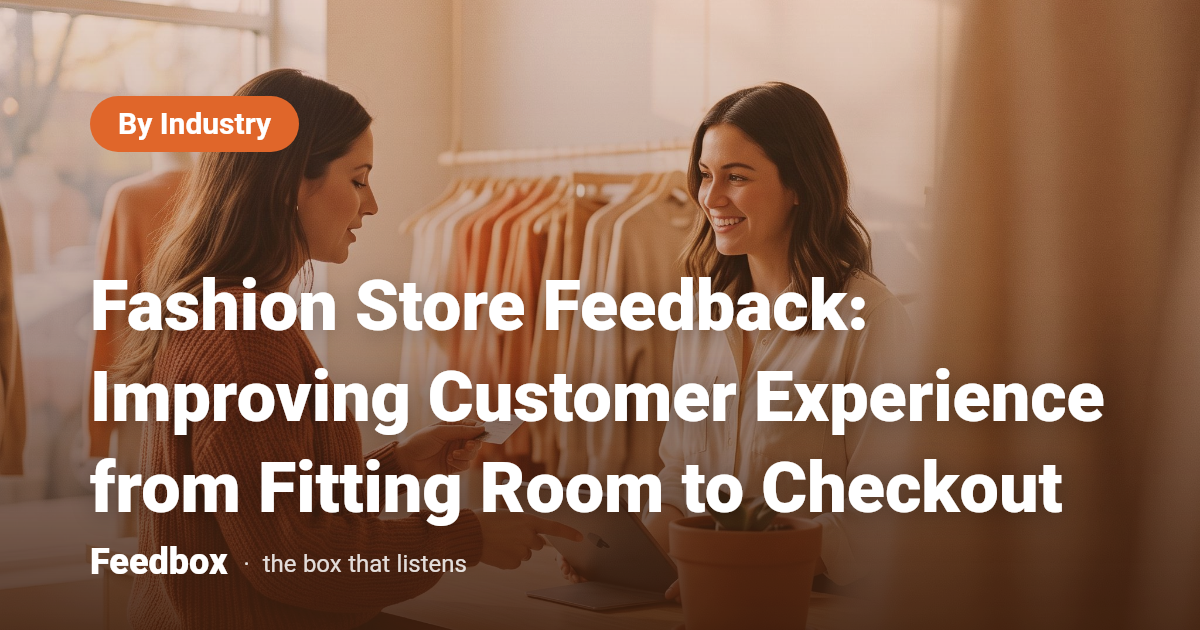
Fashion store feedback is crucial for understanding customer needs at every step, from the fitting room to checkout. Discover actionable ways to gather and use feedback to build loyalty.
Why Fashion Store Feedback Matters More Than Ever
In today's competitive retail landscape, 'fashion store feedback' is no longer just a nice-to-have—it's essential for survival. Shoppers expect more than great products; they want memorable experiences at every touchpoint, from the moment they enter the store to when they check out. According to PwC, more than half of consumers have stopped buying from a brand after a single bad experience, and nearly one third would walk away from a brand they love after just one mistake [1]. This means that even a small issue in the fitting room or at the register can have lasting impacts on loyalty and revenue.
Fashion retailers who treat feedback as a strategic asset can quickly identify pain points and opportunities to improve, giving them a critical edge in a fast-changing market.
The Silent Majority: Most Unhappy Customers Don’t Complain
A common misconception in retail is that 'no news is good news.' In reality, most dissatisfied customers simply leave without saying a word. Only about 1 in 26 unhappy customers actually take the time to complain—the rest silently churn [2]. This 'silent churn' can devastate fashion stores, as 85% of customers who left a provider say they would have stayed if their problem had been addressed [3].
Absence of feedback is not a sign of satisfaction; it often signals deeper issues that go undetected until it’s too late.
- Most unhappy customers never voice their concerns.
- Silent churn costs more than visible complaints.
- Proactive feedback collection is vital to prevent hidden losses.
Capturing Feedback: From Fitting Room to Checkout
Every stage of the in-store experience is an opportunity to learn from customers. Fitting rooms, for example, can make or break a sale—issues with lighting, cleanliness, or privacy may deter shoppers from trying on clothes or making a purchase.
Checkout is another critical moment; long waits, confusing returns, or unfriendly interactions can overshadow an otherwise positive shopping experience. Collecting fashion store feedback at both these points provides actionable insights that help retailers reduce friction and improve satisfaction.
Tools like Feedbox enable anonymous, real-time feedback via QR codes or direct links, making it easy for shoppers to share honest opinions right when it matters most.
Acting on Feedback: Turning Insights into Loyalty
Collecting feedback is just the beginning. The real value comes from acting on what customers share. Quick, visible improvements—such as fixing a broken fitting room door or streamlining the checkout process—show customers that their voices matter.
Retention pays off: acquiring a new customer can cost five to twenty-five times more than keeping an existing one, and even a modest 5% increase in retention can boost profits by 25–95% [4]. Every resolved issue is a chance to turn a detractor into a loyal advocate.
- Address fitting room complaints promptly.
- Improve checkout speed and staff training.
- Communicate changes to customers to reinforce trust.
Building a Feedback-Driven Culture in Fashion Retail
For feedback to have a lasting impact, it must become part of the store’s culture. Staff should be trained to welcome feedback—both positive and negative—and to see it as an opportunity for growth. Leaders can set the tone by celebrating improvements and sharing customer stories.
Anonymous feedback systems can help overcome the reluctance many customers feel about speaking up in person, resulting in more honest and useful input.
Winning in Fashion Retail: The Competitive Advantage of Listening
With consumer expectations rising and tolerance for mistakes falling (63% of shoppers say they’d switch brands after one bad experience) [5], listening to customers is no longer optional. Fashion retailers who prioritize feedback—especially through easy, anonymous channels—can quickly adapt to trends, fix problems, and build lasting relationships.
Ultimately, fashion store feedback is a powerful tool for creating the kind of experiences that keep shoppers coming back, from the fitting room to checkout and beyond.
FAQ
Why is fashion store feedback important?
Fashion store feedback helps identify issues in the customer journey, allowing retailers to make improvements that drive satisfaction, loyalty, and repeat business.
How can I encourage customers to leave feedback in my store?
Make it simple and convenient—use QR codes, digital links, or anonymous tools like Feedbox to lower barriers and assure privacy, which increases participation.
What are the most common pain points in fashion stores?
Common issues include fitting room cleanliness, lack of assistance, long checkout times, and poor return policies. Addressing these quickly can boost satisfaction.
How should fashion stores act on feedback?
Prioritize issues that recur or impact sales, communicate changes to staff and customers, and monitor for improvement. Quick, visible action shows customers they are heard.
What is silent churn, and why is it a threat?
Silent churn happens when customers leave without complaining. Since most unhappy customers never speak up, undetected issues can lead to significant revenue loss.