How Anonymous Customer Feedback Overcomes Cultural Barriers in Iran
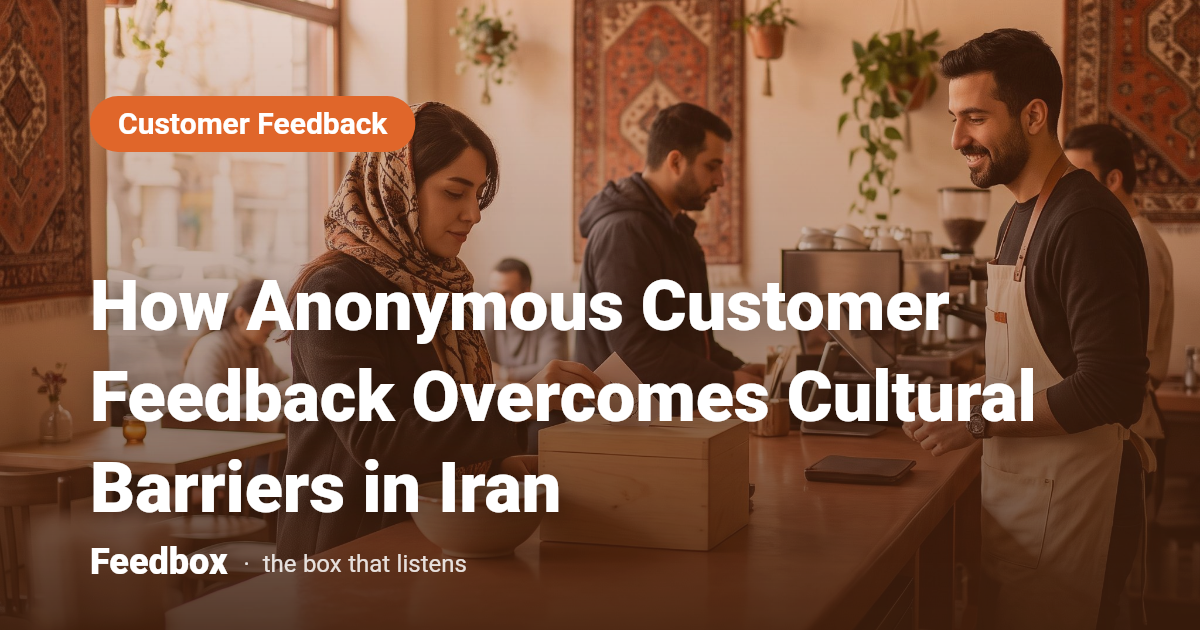
Anonymous customer feedback empowers Iranian businesses to hear real concerns, break cultural silence, and drive improvements that keep customers loyal.
The Challenge of Cultural Barriers in Iranian Customer Feedback
In Iran, many physical businesses struggle to collect honest feedback from their customers. Deep-rooted cultural norms often discourage direct complaints or criticism, especially in face-to-face interactions. Customers may avoid speaking up about poor experiences to maintain harmony or out of fear of offending staff. As a result, businesses may falsely assume that silence equals satisfaction.
However, research shows that absence of feedback is not a sign of customer happiness. In fact, 85% of customers who leave a provider say they would have stayed if their problem had been addressed, highlighting the risks of relying on assumed satisfaction [3].
Why Anonymous Customer Feedback Matters
Anonymous customer feedback is a practical solution to cultural barriers in Iranian businesses. By allowing customers to voice their opinions without revealing their identity, businesses create a safe space where honest input is possible. This method reduces social pressure and fear of confrontation, making it far more likely for customers to share both their positive and negative experiences.
This is especially important given that only about 1 in 26 unhappy customers actually complains—the remaining 25 simply leave without a word, causing what’s known as 'silent churn' [2].
The High Cost of Silent Churn in Iran
Silent churn is particularly damaging for businesses. When unhappy customers leave without providing any feedback, owners lose the chance to identify and fix underlying problems. The financial impact is significant: acquiring a new customer can cost five to twenty-five times more than retaining an existing one, and even a small increase in retention can boost profits by up to 95% [4].
In the Iranian context, where word-of-mouth and repeat business are crucial, losing silent customers can have long-lasting effects on reputation and revenue.
- Unaddressed problems drive silent customer departures.
- Retention is more profitable than constant new customer acquisition.
- Feedback absence is often a warning sign, not a compliment.
How Anonymous Feedback Tools Work
Modern anonymous feedback tools—such as Feedbox—use QR codes or web links placed in strategic locations around a business. Customers scan the code or visit the link to quickly submit their opinions, suggestions, or complaints via text or voice, all without sharing personal details.
This approach not only reduces barriers to participation but also signals to customers that their voices are welcomed and valued.
- Easy to use: No sign-up or personal info required.
- Accessible: Available on any smartphone.
- Flexible: Supports both text and voice feedback.
Turning Feedback Into Customer Loyalty
Gathering anonymous customer feedback is just the first step. The real value lies in acting on that feedback to improve products, services, and customer interactions. When businesses respond to concerns, customers notice—and are more likely to remain loyal.
Studies show that 52% of consumers have stopped buying from a brand after a bad experience, and 63% would switch to a competitor after just one negative encounter [1][5]. In a competitive Iranian market, listening to and acting on feedback can be the difference between growth and decline.
Best Practices for Iranian Businesses
To make the most of anonymous customer feedback, Iranian businesses can adopt several practical strategies:
First, clearly communicate the anonymity and purpose of the feedback system to customers. Next, place QR codes or feedback links in visible, easy-to-access locations. Finally, follow up internally on the insights received—share findings with staff and implement changes when necessary. This signals to customers that their opinions matter and encourages ongoing engagement.
- Train staff to welcome all forms of feedback.
- Review feedback regularly and take visible action.
- Share improvements with your team and customers to build trust.
FAQ
Why don't more Iranian customers give feedback directly?
Many Iranian customers avoid direct criticism due to cultural norms that prioritize harmony and discourage confrontation, making anonymous systems more effective.
How does anonymous feedback reduce 'silent churn'?
Anonymous feedback lets unhappy customers voice concerns safely, giving businesses a chance to resolve issues before customers leave in silence.
Are feedback tools like Feedbox easy for customers to use?
Yes, tools like Feedbox use simple QR codes or links that work on any smartphone, allowing quick, anonymous feedback in just a few steps.
What should businesses do with the feedback they receive?
They should analyze patterns, address recurring issues, and communicate improvements both to staff and customers to show that feedback leads to positive change.
Is lack of complaints a sign that customers are happy?
No; studies show that most unhappy customers simply leave without saying anything, so silence is often a warning, not a compliment [2][3].