Professional Ways to Collect Sporting Goods Store Feedback
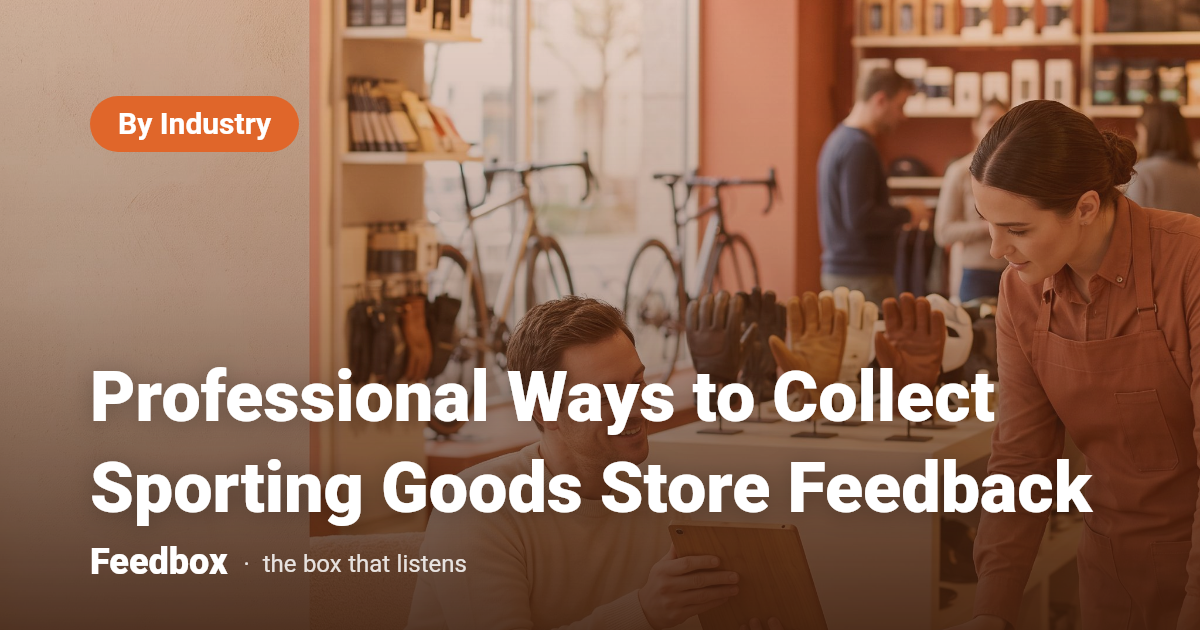
Collecting sporting goods store feedback is crucial for understanding customer needs and staying competitive. Learn the most effective, professional techniques.
Why Sporting Goods Store Feedback Matters
In today’s competitive retail landscape, sporting goods stores face increasing pressure to retain loyal customers and attract new ones. Gathering sporting goods store feedback provides valuable insights into what customers truly think about your products, staff, and overall shopping experience. Research shows that acquiring a new customer costs up to 25 times more than keeping an existing one, and a mere 5% increase in retention can boost profits by 25–95% [4].
Yet, most unhappy customers do not voice their concerns: only 1 in 26 will actually complain, while the rest simply stop shopping at your store [2]. This means that silence from your customers is not a sign of satisfaction [3]. By proactively seeking feedback, you can identify issues before they drive your customers away.
Common Feedback Collection Methods in Sporting Goods Stores
Retailers have a range of options for gathering customer insights. Each method has its own strengths and limitations. The key is to choose approaches that fit your store’s environment and customer preferences.
Traditional methods include printed surveys, suggestion boxes, and face-to-face questions. While familiar, these can suffer from low response rates or lack of candor, especially with sensitive topics. Digital surveys via email or SMS may reach more people but still rely on customers’ willingness to participate after their visit.
- Printed comment cards or paper surveys
- Physical suggestion boxes
- Staff asking for feedback at checkout
- Follow-up emails or SMS surveys
- Incentivized feedback (discounts, giveaways)
The Power of Anonymous Feedback Channels
Many customers hesitate to share honest feedback face-to-face, especially if their comments are negative. Anonymous feedback options—such as voice or text submissions via QR codes—remove this barrier, leading to more candid responses and higher participation rates.
Solutions like Feedbox enable sporting goods stores to collect feedback instantly and anonymously, right at the point of experience. Customers simply scan a QR code or visit a short link, then leave their comments or record a voice message. The simplicity and privacy encourage more customers to share both positive ideas and critical concerns.
- Encourages honest, unfiltered feedback
- Captures input from those unlikely to complain directly
- Can be integrated seamlessly into store signage or receipts
Designing Effective In-Store Feedback Touchpoints
Placement and visibility are essential for gathering meaningful sporting goods store feedback. Feedback tools should be highly visible near exits, at checkout counters, or in high-traffic areas of the store. Clear signage with a call to action—such as 'Tell us what you think'—increases participation. Consider using digital kiosks or tablets for quick surveys, or QR codes on receipts for mobile access.
To maximize engagement, keep surveys brief and focused. Ask open-ended questions about the shopping experience, product selection, and staff helpfulness. Offering the option for anonymous feedback, especially via voice or text, can make customers more comfortable sharing their true opinions.
Acting on Feedback: Closing the Loop
Collecting feedback is only valuable if you act on it. Regularly review and categorize responses to spot trends and recurring issues. Share relevant feedback with your team, and let customers know when changes are made based on their input.
Research highlights the risks of ignoring feedback: 52% of consumers have stopped buying from a brand after a bad experience, and 32% would walk away from a brand they love after just one bad experience [1]. By responding to and resolving issues, you show customers their voices matter—directly impacting loyalty and retention.
Best Practices for Continuous Improvement
Effective feedback collection is not a one-time project, but an ongoing process. Rotate survey questions periodically to explore different aspects of the customer journey. Regularly update staff on feedback trends and train them to handle suggestions and complaints constructively.
Combine multiple feedback channels—paper, digital, anonymous, and direct—to reach a broader audience. Most importantly, celebrate improvements and share success stories so customers and staff see the tangible results of their input.
FAQ
Why do most customers avoid giving feedback in sporting goods stores?
Many customers feel uncomfortable voicing complaints directly or believe their feedback won’t make a difference. Studies show only about 1 in 26 unhappy customers actually provide feedback—the majority simply leave without saying anything [2].
How can anonymous feedback improve response rates?
Anonymous channels reduce fear of confrontation and make it easier for customers to share honest opinions, especially about sensitive issues. This typically leads to more candid and actionable feedback.
What are the risks of not collecting feedback from sporting goods shoppers?
Ignoring feedback can lead to silent churn, where dissatisfied customers stop shopping without warning. Up to 85% of those who leave say they would have stayed if their issue had been addressed [3].
How often should a sporting goods store review customer feedback?
Regular review—at least weekly—is recommended to quickly identify emerging issues and demonstrate to customers that their input is valued.
What are the most effective locations for collecting feedback in-store?
The best locations are high-traffic areas such as near store exits, checkout counters, and customer service desks, where customers are most likely to engage with feedback tools.