Restaurant Feedback Without Annoying Guests: Fast, Frictionless Insights
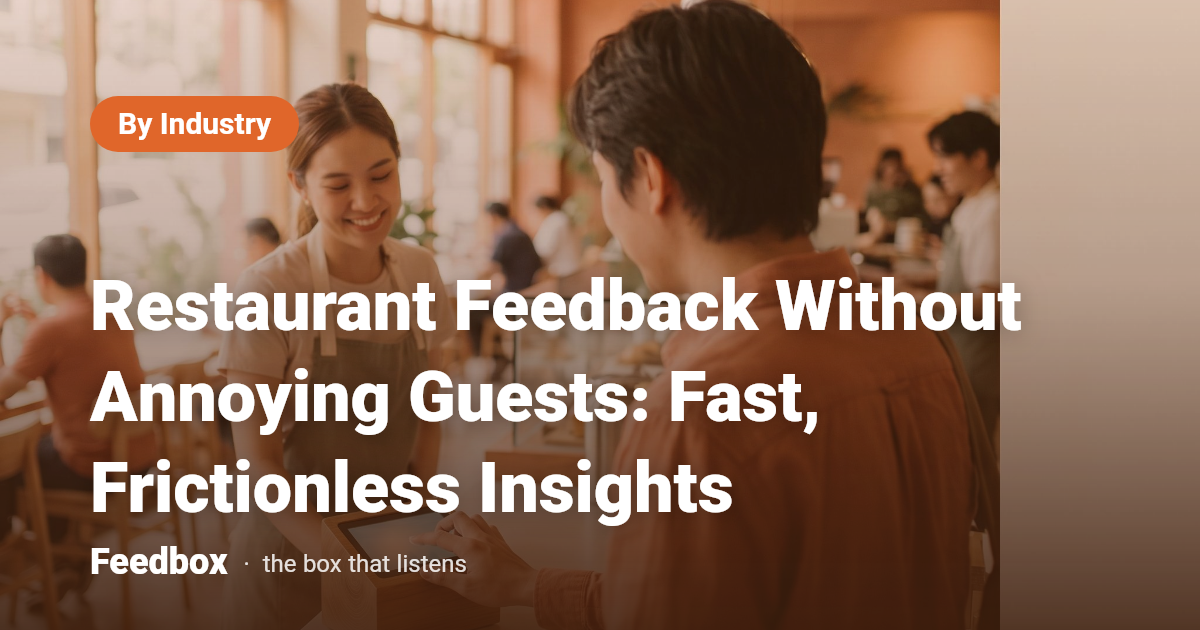
Getting honest restaurant feedback without annoying guests is possible—and essential for loyalty. Learn how to make it fast, easy, and effective.
Why Restaurant Feedback Without Annoying Guests Matters
In the competitive world of hospitality, the way restaurants handle feedback can make or break their success. Yet, many traditional feedback methods—like lengthy forms or awkward in-person questions—leave guests feeling inconvenienced or pressured. The result? Silence, rather than insight. Focusing on restaurant feedback without annoying guests is crucial to capturing honest experiences and fostering loyalty.
Studies show that a single bad experience prompts 63% of consumers to consider switching to a competitor, and more than half stop buying from brands altogether after a negative interaction [5][1]. With tolerance for poor service at an all-time low, listening to your guests in a way that respects their time and comfort isn’t just considerate—it’s a business imperative.
The Real Cost of Friction: Why Guests Rarely Speak Up
It’s easy to believe that no news is good news, but research tells a different story. Only about 1 in 26 unhappy customers actually complains; the other 25 simply leave without saying a word [2]. This silent churn is dangerous, as it gives restaurants a false sense of security and prevents them from addressing root causes of dissatisfaction.
In fact, 85% of customers who left a provider say they would have stayed if their problem had been addressed. The absence of feedback is not a sign of satisfaction—it’s often a warning sign that’s easy to miss [3].
What Makes Feedback Frictionless for Restaurant Guests?
Frictionless feedback means making it as quick, easy, and comfortable as possible for guests to share their thoughts. For restaurants, this involves:
• Offering feedback opportunities that are visible but optional—never pushy
• Keeping surveys or comment forms short—ideally a single question or tap
• Allowing anonymous input, which can make guests more honest
• Providing digital options such as QR codes or links, so guests can respond on their terms, in-the-moment
When feedback tools are effortless and discreet, guests are more likely to share valuable insights without feeling bothered.
In-the-Moment Feedback: Capturing Honest Guest Insights
Feedback is most useful when it’s timely—collected at the point of experience, not hours or days later. In-the-moment feedback lets guests quickly share what worked or what didn’t while their impressions are fresh.
Technologies like Feedbox enable this by providing table-top QR codes or links that guests can scan and use to leave instant, anonymous feedback. This approach removes the pressure of direct confrontation and eliminates the hassle of long surveys, making it much more likely that guests will participate.
From Feedback to Loyalty: The Business Impact
Responding to guest feedback—especially negative experiences—can have dramatic effects on loyalty and profitability. Acquiring a new restaurant customer costs five to twenty-five times more than retaining an existing one, and just a 5% increase in retention can boost profits by 25% to 95% [4].
By making it easy for guests to speak up, restaurants can address issues before they lead to churn, turning potential critics into loyal advocates and reducing the high cost of customer acquisition.
Practical Steps to Collect Restaurant Feedback Without Annoying Guests
Here are actionable ways restaurants can gather honest, valuable feedback without disrupting the guest experience:
- Display QR codes at tables or receipts for quick, optional feedback.
- Limit questions to one or two essentials—avoid lengthy forms.
- Offer both text and voice options for guests’ comfort.
- Respect anonymity to encourage candid responses.
- Act on feedback promptly and visibly to show guests they’re heard.
Conclusion: Listening Without Friction Drives Success
Providing restaurant feedback without annoying guests isn’t just about courtesy—it’s about survival in a competitive market. Simple, in-the-moment tools like Feedbox can unlock a steady flow of insights, helping restaurants improve, retain more guests, and thrive. Ultimately, the most successful restaurants are those that listen—and make it easy for their guests to speak up.
FAQ
Why do most restaurant guests avoid giving feedback?
Most guests avoid giving feedback because traditional methods are time-consuming, intrusive, or uncomfortable. As a result, many dissatisfied customers simply leave without voicing their concerns.
How can restaurants collect feedback without annoying guests?
Restaurants can use short, optional digital tools like QR codes and offer anonymous, in-the-moment feedback options that are easy for guests to use and respect their privacy.
What is silent churn, and how does feedback help prevent it?
Silent churn refers to customers who leave without complaining. Easy, frictionless feedback methods help identify and address problems before guests decide to stop returning.
Does acting on feedback really improve restaurant retention?
Yes. Addressing guest feedback promptly can turn negative experiences into loyalty, and even small increases in retention can significantly boost profits [4].
What kind of feedback questions work best for restaurants?
Simple, targeted questions—such as rating the experience or identifying one thing to improve—are most effective. Avoid lengthy forms to maximize participation.