The Digital Suggestion Box: Why Paper No Longer Works
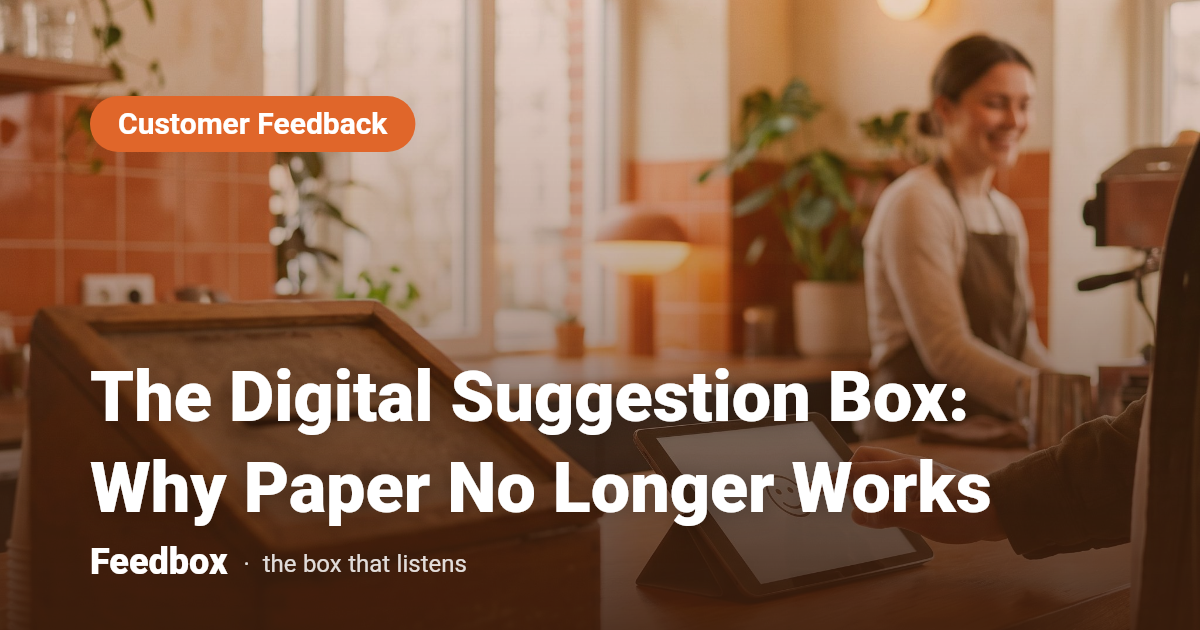
Physical businesses are rethinking customer feedback by moving from paper to digital suggestion boxes. Here’s why this shift matters and how it improves results.
Why Customer Feedback Matters More Than Ever
In today’s competitive marketplace, understanding and acting on customer feedback is crucial for every physical business. Studies show that a single bad experience can drive customers away—even those loyal to your brand. In fact, 63% of consumers say they would switch to a competitor after just one negative interaction, and tolerance for bad experiences continues to fall each year [5].
Yet, customers rarely voice their concerns directly. Only about 1 in 26 unhappy customers will actually share their dissatisfaction, while the rest simply leave without feedback [2]. This silent churn poses a real risk, as the absence of complaints does not mean customers are satisfied [3].
The Limitations of Paper Suggestion Boxes
The paper suggestion box, once a staple in stores, restaurants, and offices, is quickly becoming obsolete. While its intention was good, this method comes with significant drawbacks in the modern business environment.
Paper forms are often ignored, misplaced, or forgotten. They require manual collection and transcription, which delays response times and increases the risk of oversight or lost information. Additionally, customers may feel uncomfortable sharing honest feedback on a handwritten card, especially if anonymity is questionable.
In an era where customers expect swift reactions and seamless experiences, paper simply can’t keep up.
What Makes the Digital Suggestion Box Different?
A digital suggestion box provides a simple, accessible, and anonymous way for customers to share feedback using their phone or device. Whether it’s a QR code on a receipt or a link displayed in-store, the barrier to entry is minimal.
Digital tools like Feedbox allow for real-time feedback—voice or text—directly to management, with the option for instant notifications and analytics. This means issues can be addressed faster and trends can be identified before they become bigger problems.
Crucially, digital suggestion boxes also create a sense of psychological safety, encouraging more honest and actionable input from customers.
The Business Impact: Retention, Reputation, and Revenue
Listening to customers isn’t just about fixing problems—it’s about building loyalty and long-term value. Acquiring a new customer costs five to twenty-five times more than keeping an existing one, and just a 5% increase in retention can boost profits by 25–95% [4]. When customers feel heard, they’re more likely to return and recommend your business.
Moreover, 52% of consumers have stopped buying from a brand after a bad experience, and even brands they love aren’t safe: 32% would leave after just one bad encounter [1]. Digital suggestion boxes help businesses catch these issues early, minimizing churn and protecting both reputation and revenue.
Overcoming the Challenge of Silent Churn
Silent churn happens when dissatisfied customers leave without saying a word. According to research, 85% of customers who left a provider said they would have stayed if their problem had been addressed [3]. This makes it clear: not hearing complaints isn’t a sign of satisfaction.
By making feedback easy, fast, and discrete with digital suggestion boxes, businesses can uncover hidden issues and intervene before losing valuable customers.
Practical Steps to Transition to a Digital Suggestion Box
Ready to upgrade from paper to digital? Here are some actionable steps to get started:
- Identify key locations for QR codes or digital feedback prompts in your business.
- Choose a platform that supports both voice and text input for accessibility.
- Communicate to customers that their feedback is valued and truly anonymous.
- Monitor responses regularly and act promptly on actionable suggestions.
- Share improvements or changes made as a result of customer feedback.
Conclusion: Make Feedback Work for Your Business
The digital suggestion box is no longer a luxury—it’s a necessity for physical businesses that want to thrive in a customer-driven market. By moving away from outdated paper methods, companies can tap into real, honest feedback, address issues quickly, and foster deeper loyalty.
Solutions like Feedbox empower businesses to listen better, act faster, and ultimately build stronger relationships with their customers.
FAQ
What is a digital suggestion box?
A digital suggestion box is an online tool that allows customers to provide anonymous feedback to a business, often through a QR code or web link, making it faster and more accessible than traditional paper forms.
Why are paper suggestion boxes becoming outdated?
Paper suggestion boxes are slow, insecure, and often overlooked. They make it difficult for customers to share honest feedback and require manual handling, which can result in lost or delayed responses.
How can digital suggestion boxes help reduce silent churn?
Digital platforms make it easy and comfortable for customers to voice concerns, giving businesses the chance to address issues before dissatisfied customers silently leave.
Are digital suggestion boxes really anonymous?
Yes, reputable digital suggestion boxes ensure customer anonymity, encouraging more honest and useful feedback.
How quickly should businesses respond to digital feedback?
Ideally, businesses should monitor digital feedback regularly and respond or act on actionable items as quickly as possible to demonstrate responsiveness and care.