How to Collect Real-Time Customer Feedback in Chain Stores
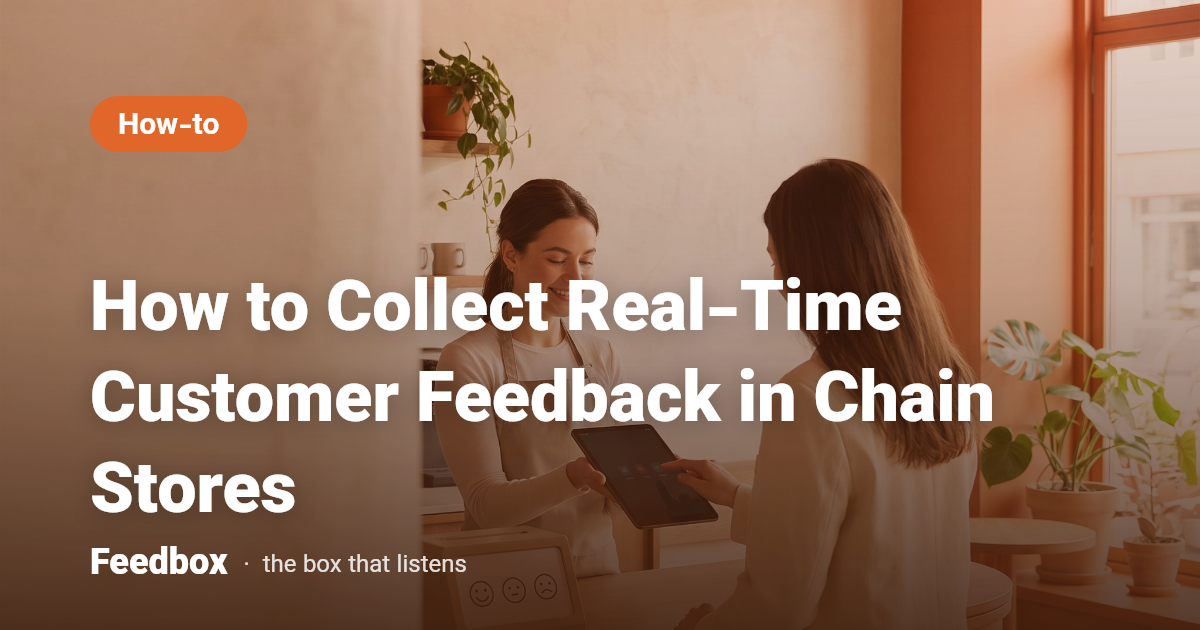
Collecting real-time customer feedback in chain stores is essential for retaining customers and improving service. Learn effective strategies to capture insights as they happen.
Why Real-Time Customer Feedback Matters in Chain Stores
For chain stores, delivering a consistent and satisfying customer experience across multiple locations is a constant challenge. Real-time customer feedback provides actionable insights while the customer's impressions are still fresh, enabling businesses to respond to issues or praise immediately. This proactive approach is critical: research shows that 52% of consumers have stopped buying from a brand after a single bad experience, and even brands people love are not immune—32% would walk away after just one bad interaction [1].
Gathering timely feedback empowers managers at every store to identify and resolve problems quickly, ensuring that negative experiences do not lead to silent churn or lost loyalty.
The High Cost of Missed Feedback
Many business owners assume that no news is good news, but the reality is quite different. Only about 1 in 26 unhappy customers actually voice their concerns; the rest simply leave without saying a word [2]. This phenomenon, known as 'silent churn,' means that a lack of complaints is not an indicator of customer satisfaction. In fact, 85% of customers who left a provider said they would have stayed if their problem had been addressed [3].
Since acquiring a new customer can cost five to twenty-five times more than retaining an existing one, and a mere 5% increase in retention can boost profits by 25–95% [4], it’s clear that catching and acting on feedback in real time is a high-impact business strategy.
Best Practices for Real-Time Feedback Collection
Effective real-time customer feedback collection in chain stores requires a blend of strategy and technology. Here are several proven practices to consider:
- Place easily accessible feedback points (such as QR codes or kiosks) at key customer touchpoints.
- Encourage feedback immediately after the service experience, when memories are still vivid.
- Offer both anonymous and identified feedback options to build trust and maximize participation.
- Train frontline staff to promote feedback tools without being intrusive.
- Monitor and respond to feedback rapidly to show customers that their input matters.
Leveraging Technology for Seamless Feedback
Digital solutions have revolutionized how chain stores can collect and analyze feedback. Tools like Feedbox allow customers to share their thoughts anonymously via voice or text by simply scanning a QR code with their phone. This lowers the barrier to participation and encourages more honest responses—especially from those who might otherwise remain silent.
Centralized feedback platforms also enable head office and store managers to view trends, flag urgent issues, and measure performance across locations in real time, facilitating faster and more effective decision-making.
Turning Feedback into Action
Collecting real-time customer feedback is only the first step; acting on it is what drives real improvement. Chain stores should establish clear processes for reviewing feedback, prioritizing issues, and implementing changes. Communicating back to customers—either directly or through visible changes—helps close the loop and demonstrates that their voices are valued.
According to industry data, a majority of consumers (about 63%) say they would switch to a competitor after just one bad experience, and expectations for service are only rising [5]. Rapidly addressing feedback is essential for protecting your brand’s reputation and ensuring long-term success.
Measuring and Sustaining Improvement
To sustain the benefits of real-time customer feedback, chain stores should regularly analyze feedback data for patterns and recurring issues. Sharing insights and best practices across locations can help raise service standards company-wide. Additionally, setting measurable goals for response times and resolution rates keeps teams accountable and focused on ongoing improvement.
FAQ
Why is real-time customer feedback important for chain stores?
It enables rapid identification and resolution of issues, leading to higher customer satisfaction and retention, and helps maintain consistent service across all locations.
How can we encourage customers to give feedback in real time?
Make feedback tools easy to access (like QR codes), offer both anonymous and identified options, and let customers know their input will be reviewed and acted on.
What are the risks of not collecting real-time feedback?
Without timely feedback, most dissatisfied customers won’t complain—they’ll just leave, resulting in lost revenue and missed opportunities to improve [2][3].
How does technology like Feedbox help with feedback collection?
It allows customers to quickly and anonymously share feedback via their phones, increasing participation rates and providing actionable insights to store managers.
What should chain stores do after receiving feedback?
Review, prioritize, and act on feedback promptly. Communicate improvements to customers to show their input leads to real change.